

By Dr. Ileana Johnson Paugh ——Bio and Archives--June 10, 2015
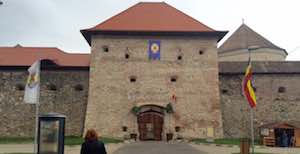 We found Cetatea Fagarasului half-way between Brasov and Sibiu, an hour drive off the beaten path for foreign tourists. I would venture to say that we were the only overseas visitors on that drizzly morning. The fortress was surrounded by a fosse populated by black and white swans, perfect sentries for a castle that was often under Ottoman siege. Weeping willows lined the street leading to the entrance.

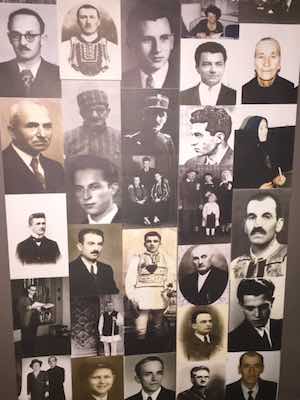 The museum exhibited photographs of those imprisoned and killed, original 1960 documents of peasants' obligations to turn in a quota of everything they produced or grew, documents of rationed consumption, rationing of clothing and shoes, rationing of consumption of meat permitted only on Saturday and Sunday for a total of 250 grams weekly, with a supplement for those who actually worked in a factory, and the empty promise that bath soap and powdered detergent would be distributed soon. This rang similar to the current rationed consumption and dire economic situation in Venezuela where Hugo Chavez's socialism has destroyed the once self-sufficient economy.
Before the socialists took complete control of the country, the Directive NKVD 2-6 of 1947 made sure that any farm would be unprofitable to farm or rent to farm in order to facilitate collectivization. If the peasants offered more resistance to collectivization, they were to be forced to turn over to the communist party a higher quota of what they produced.
The museum exhibited photographs of those imprisoned and killed, original 1960 documents of peasants' obligations to turn in a quota of everything they produced or grew, documents of rationed consumption, rationing of clothing and shoes, rationing of consumption of meat permitted only on Saturday and Sunday for a total of 250 grams weekly, with a supplement for those who actually worked in a factory, and the empty promise that bath soap and powdered detergent would be distributed soon. This rang similar to the current rationed consumption and dire economic situation in Venezuela where Hugo Chavez's socialism has destroyed the once self-sufficient economy.
Before the socialists took complete control of the country, the Directive NKVD 2-6 of 1947 made sure that any farm would be unprofitable to farm or rent to farm in order to facilitate collectivization. If the peasants offered more resistance to collectivization, they were to be forced to turn over to the communist party a higher quota of what they produced.
 TA poster from that era stated, "Long live the Soviet Union, the liberator of the Romanian people." The Soviets actually destroyed every freedom and the wealth and comfort that the Romanian people formerly enjoyed under the monarchy and imprisoned them into a terrifying concentration camp unlike any other for 41 years.
"Let us promise anything asked of us, but, when the moment will come, let us remember that the communist honor is to not fulfill these promises," said V.I. Lenin in his "Empty words about freedom."
The massive propaganda was directed from Moscow because the Romanian commies did not have experience yet. Under their guidance, the Romanian Communist Party started a campaign of constant agitation and mobilization of the population, and non-stop manufactured crises.
The "enemies of the people" were identified during public meetings, press releases, and public trials. Dailies, magazines, newspapers, posters, journals, brochures, and pamphlets continued the indoctrination. An entire army of community organizers were released to agitate the masses.
A massive campaign to destroy the national memory, to falsify the past, and to rewrite history and the present began. The press pushed communist utopia non-stop. "The political police, under Soviet control, began a societal surveillance by agents and informers," according to museum archives.
Once the urban population and the elites were subjugated, next came the peasants' turn; they had been pretty much left alone until 1949. The commies made the peasants' livelihood very difficult by forcing them into obligatory back breaking quotas and by controlling their commerce with agricultural products. The communists eventually destroyed the peasants' individual property rights. Small farmers were constantly demonized, beaten, threatened, tortured, and imprisoned until they relented to become part of the communist collectivization agricultural machine.
TA poster from that era stated, "Long live the Soviet Union, the liberator of the Romanian people." The Soviets actually destroyed every freedom and the wealth and comfort that the Romanian people formerly enjoyed under the monarchy and imprisoned them into a terrifying concentration camp unlike any other for 41 years.
"Let us promise anything asked of us, but, when the moment will come, let us remember that the communist honor is to not fulfill these promises," said V.I. Lenin in his "Empty words about freedom."
The massive propaganda was directed from Moscow because the Romanian commies did not have experience yet. Under their guidance, the Romanian Communist Party started a campaign of constant agitation and mobilization of the population, and non-stop manufactured crises.
The "enemies of the people" were identified during public meetings, press releases, and public trials. Dailies, magazines, newspapers, posters, journals, brochures, and pamphlets continued the indoctrination. An entire army of community organizers were released to agitate the masses.
A massive campaign to destroy the national memory, to falsify the past, and to rewrite history and the present began. The press pushed communist utopia non-stop. "The political police, under Soviet control, began a societal surveillance by agents and informers," according to museum archives.
Once the urban population and the elites were subjugated, next came the peasants' turn; they had been pretty much left alone until 1949. The commies made the peasants' livelihood very difficult by forcing them into obligatory back breaking quotas and by controlling their commerce with agricultural products. The communists eventually destroyed the peasants' individual property rights. Small farmers were constantly demonized, beaten, threatened, tortured, and imprisoned until they relented to become part of the communist collectivization agricultural machine.
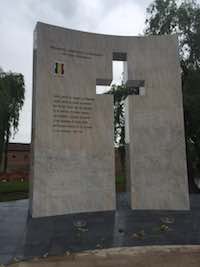 In Tara Fagarasului which is the larger area surrounding this fortress prison in Cetatea Fagarasului, the social order was totally and systematically destroyed. Eighty percent of the population was considered well-off farmers, wealthy farmers, and middle peasants. More than 1,000 locals suffered in forced labor camps, were deported to communist prisons around the country, and thousands of family members were discriminated against and maligned socially and economically.
The wealthy farmer was labeled "chiabur," from the Turkish word "kibar," meaning "a good steward." The farmers were demonized and the word "chiabur" was successfully used by communists as a label to justify repression against private land owners. The manufactured word "chiabur" was not unlike the bogus term of "white privilege" being floated by the mainstream media and academia in our own country.
The first communist president, Gheorge Gheorghiu-Dej, was advising the apparatchiks involved in the land confiscation, that they should confiscate land in such a way that it did not look like nationalization, but at the same time, they should not leave the land owners much, "just enough to buy a cigarette," and to pay them for their tractors scrap metal prices. "For better combines that do not need much repair, we should pay them 5 percent more." (Gheorghe Gheorghiu-Dej speech on March 26, 1959)
Gheorghiu-Dej continued, "If a rich landowner protested, he can be shot on the spot, to let all know who would dare not to turn in their quotas what will befall them." (Instructions to all member of Securitate, 1948)
I still remember, as a child, being forced to wait in long lines with my parents to view this man's body in state when he passed away. The entire country was supposed to mourn his passing even though they hated his guts for what he had done to the country.
To justify the existence and establishment of the terror state, enemies had to be found. If none were found, enemies had to be invented, said one of the Soviet community organizers and agitators, Tzvetan Todorov. In 1951 forced deportations spread ethnic Swabians and Romanians around the country, especially those who opposed the regime and collectivization. Many were sent south in Baragan and Basarabians were deported to Fagaras. But an armed resistance developed in the Fagaras Mountains in Transylvania.
As part of the same Directive, NKVD 2-6 of 1947, all parties had to be unified under one party, making sure that all key positions would be occupied by the secret (Soviet) services.
Cetates Fagarasului, the medieval fortress, saw the incarceration between September 1950-April 1960 of over 4,000 former employees from the Information Services, State Security, military judges, policemen, diplomats, and those who helped the anti-communism fighters. Prisoners were jailed without due process and without sentencing. Because of the harsh and inhuman imprisonment conditions, 166 generals, officers, clerks, workers, and peasants died there.
I dug up a tiny rock from the inner courtyard for my friend who collects stones from different parts of the world. I washed it carefully before packing it, wondering how much blood of innocents tortured or killed in battle or in prison had washed over these rocks over the centuries.
In Tara Fagarasului which is the larger area surrounding this fortress prison in Cetatea Fagarasului, the social order was totally and systematically destroyed. Eighty percent of the population was considered well-off farmers, wealthy farmers, and middle peasants. More than 1,000 locals suffered in forced labor camps, were deported to communist prisons around the country, and thousands of family members were discriminated against and maligned socially and economically.
The wealthy farmer was labeled "chiabur," from the Turkish word "kibar," meaning "a good steward." The farmers were demonized and the word "chiabur" was successfully used by communists as a label to justify repression against private land owners. The manufactured word "chiabur" was not unlike the bogus term of "white privilege" being floated by the mainstream media and academia in our own country.
The first communist president, Gheorge Gheorghiu-Dej, was advising the apparatchiks involved in the land confiscation, that they should confiscate land in such a way that it did not look like nationalization, but at the same time, they should not leave the land owners much, "just enough to buy a cigarette," and to pay them for their tractors scrap metal prices. "For better combines that do not need much repair, we should pay them 5 percent more." (Gheorghe Gheorghiu-Dej speech on March 26, 1959)
Gheorghiu-Dej continued, "If a rich landowner protested, he can be shot on the spot, to let all know who would dare not to turn in their quotas what will befall them." (Instructions to all member of Securitate, 1948)
I still remember, as a child, being forced to wait in long lines with my parents to view this man's body in state when he passed away. The entire country was supposed to mourn his passing even though they hated his guts for what he had done to the country.
To justify the existence and establishment of the terror state, enemies had to be found. If none were found, enemies had to be invented, said one of the Soviet community organizers and agitators, Tzvetan Todorov. In 1951 forced deportations spread ethnic Swabians and Romanians around the country, especially those who opposed the regime and collectivization. Many were sent south in Baragan and Basarabians were deported to Fagaras. But an armed resistance developed in the Fagaras Mountains in Transylvania.
As part of the same Directive, NKVD 2-6 of 1947, all parties had to be unified under one party, making sure that all key positions would be occupied by the secret (Soviet) services.
Cetates Fagarasului, the medieval fortress, saw the incarceration between September 1950-April 1960 of over 4,000 former employees from the Information Services, State Security, military judges, policemen, diplomats, and those who helped the anti-communism fighters. Prisoners were jailed without due process and without sentencing. Because of the harsh and inhuman imprisonment conditions, 166 generals, officers, clerks, workers, and peasants died there.
I dug up a tiny rock from the inner courtyard for my friend who collects stones from different parts of the world. I washed it carefully before packing it, wondering how much blood of innocents tortured or killed in battle or in prison had washed over these rocks over the centuries.View Comments
Dr. Ileana Johnson Paugh, Ileana Writes is a freelance writer, author, radio commentator, and speaker. Her books, “Echoes of Communism”, “Liberty on Life Support” and “U.N. Agenda 21: Environmental Piracy,” “Communism 2.0: 25 Years Later” are available at Amazon in paperback and Kindle.