

By David Robb ——Bio and Archives--March 29, 2025
American Politics, News | CFP Comments | Subscribe | Email Us
We frequently hear about how universities and colleges train people in so-called liberal ideologies, and how destructive that training is. Actually the problem starts much, much earlier. One author claims that he learned all he needed to know in kindergarten, and in one way, that may be true. In any case, while providing a good education to every child was the admirable goal of public education, some saw it as an opportunity for indoctrination in what they saw as a properly docile and controlled populace.

In the minds of early advocates, a public school system would provide for consistency in what was taught so that impressionable children could be shaped according to the whims of those with an objective, and the diversity of thought and opinion resulting from independent schools could be eliminated. A consistent product could be ensured—even if the parents or the "product" objected. Unfortunately, diversity of thought and opinion is essential to a free and healthy society.
The consequences of this policy and approach are now upon us. We have a Left that is intolerant, convinced they are correct, especially when they aren't, think in terms of black and white, are unable to evaluate, much less consider, alternative explanations, are prone to anger and indignation, use anger and dishonesty to manipulate, will resort to intimidation and violence to suppress disagreement, see disagreement with their position as an attack, will adopt a one-sided argument as "correct" and adamantly resist any alternative explanation, and will construct self-serving explanations as to why they are "right" and any contradiction is "wrong". They are frequently wrong because they are resistant to correction and learning. They often join in groups where membership is contingent on agreement.
They are taught from the earliest days in schools, that to be wrong is humiliating, brings on punishment, results in loss of privileges and opportunities, and is generally to be avoided at all costs. They also learn that other students can be intimidated to suppress disagreement. Even teachers can be manipulated by anger, threats, and even violence to prevent them from labeling a student as incorrect. Others learn to go along with the more aggressive individuals for protection or to be inoffensive and to hide so as not to be noticed and exposed when they don't have the "right" answer.

Teaching in public schools is oriented to material that can be tested against so that a student's answers can be evaluated as right or wrong on an exam. High performance in terms of a percentage of right answers is rewarded with recognition, special opportunities, participation in activities and in a number of other ways. Low performance engenders disapproval, ridicule, loss of opportunities, humiliation, ostracism and other unpleasant consequences.
In real life there are few situations where there is only one "right" answer. Often there are multiple answers that will produce satisfactory results in a situation. Sometimes there are no right answers, and at times there are answers that are right or wrong depending on the particulars of the circumstance. Occasionally, even the "right" answer is the wrong answer.
Students are discouraged from critical thinking and encouraged to substitute criticism instead. In critical thinking, a person gathers information from multiple sources, evaluates the information for its applicability, its agreement with objective measures, and attempts to formulate an explanation that best agrees with the facts at hand. A critical thinker is always open to reevaluation of a position if new facts or information is obtained. Criticism is aimed at finding fault, without identifying what good might exist and what problem was solved.
I have a text book on applied logic that was once taught in high schools to develop critical thought ability. It was discontinued due to difficulty in adapting results to standardized testing and grading. Prior focus on being able to apply a lesson to novel circumstances has been replaced by rote recitation and the ability to provide an approved answer on a test that can be evaluated as right or wrong, and thus graded.
With years of indoctrination, such schools have produced a huge crop of "students" who will do almost anything to avoid the consequences of being "wrong". Contempt, anger, ridicule and other methods will be used to try to convince those who disagree with them that the ones who differ are the ones who are wrong. If those methods fail, ostracism, canceling, denial of opportunities and other more active measures will be taken to avoid the company of those who might challenge their beliefs. If all else fails, intimidation and outright violence will be used to coerce agreement, or to force suppression of opposing views. All these things are learned in public schools as effective methods to avoid being wrong.
As a result, we even see teachers being threatened in their own classroom, or assaulted inside and outside school to force them to comply with the student's need to be "right".
Some individuals are fortunate enough to have experience with reality outside of school, either through good parenting, life experiences, opportunities to try and fail and try again, encounters with wise mentors, or other occasions to deal with situations where "right" answers are less effective than working answers. The military has traditionally been a good source of such reality experiences. So have farming, ranching, and other occupations that must deal with things as they are, not as one might wish.
Previously, most grew up on farms or in rural settings where confrontation with reality was a daily occurrence. They often worked with parents and adults who had learned to cope with that reality and who could pass on the practice of critical thinking for practical results. Education was oriented to useful fields of arithmetic, reading, writing, basic economics, history, and basic social skills including honest dealings, acceptance of responsibility, and other essential traits.
Modern city life has replaced the rural experience for the great majority of people, eliminating many opportunities to encounter and learn from reality. The artificial environment of cities acts to shield people from hard circumstances, replacing them instead with situations where an outcome can be negotiated or manipulated. In this way, cities support and reinforce the skills of the Left, and penalize conservative experience.
In the US, the transition to urban started in the 1910s, with over 80% of the population today residing in cities. Globally, the transition only happened around 2007. This great experiment of living divorced from reality is recent, and the results are not encouraging.
In urban settings, public schools have largely replaced the traditional rural schools. Rural schools were organized by parents who would pool resources to hire one or more teachers who would be responsible to the parents for giving their children a good education. This led to a focus on education in useful skills with little or no indoctrination.
Social norms of respect for others, obedience of laws and rules, shared history, and the superiority of reason over emotion was ancillary to "book learning". One only need to look at some of the textbooks of the time, such as the McGuffy Readers where even a third grade textbook is beyond the ability of many current high school "graduates"
Those who successfully avoid the black/white, right/wrong indoctrination are usually called conservatives. These people are generally open to disagreement, value exchange of ideas, will learn from experience, are often in situations where a good solution is better than a "right" solution, are tolerant of differences, and generally only consider violence a last resort to be employed with maximum effectiveness when needed. Live and let live is emblematic of the conservative attitude.
The Left learned to argue that there were more important things than getting a right answer. It was vital to appear to have compassion for the poor, to seem to support those who were helpless and downtrodden. I say appear, because no credit is given, no recognition gained, no moral superiority can be claimed unless the virtuous behavior is noticed. Virtuous action unnoticed is virtue wasted. Virtue signalling is more important than actual virtue.
It is also great value to the Left to have a designated group, such as blacks or transgenders or gays or Palestinians that can be used as an example and source of opportunities to appear virtuous. Support of that group can be publicized to demonstrate superiority and virtue that can be signaled. Others who do not express support for the designated group can be disparaged for their "oppression" and greed and racism and lack of compassion. Again, all things learned and even encouraged in public school. Perception is greater than reality, and even becomes the reality.
By appearing to have superior moral virtue and compassion, one can overcome the importance of being factually correct, and claim to have higher sensibilities that deserve great rewards. All the manipulation skills of contempt, humiliation, social distain, cancellation, and even violence learned in public schools to avoid being "wrong" can be justified as serving a greater cause.
Service to a higher purpose puts one above social norms of civilized behavior, and even above the petty laws that the unenlightened conservatives must follow. Indeed, all the punishments the Left suffered for being "wrong" can be inflicted on those despised people who know how to make things work, who have practical skills that generate wealth and value. It becomes reasonable for those who claim moral superiority to take from those lesser beings who only create wealth and value.
Further, since they have convinced themselves they are superior beings, they feel they have the privilege to take unilateral action to "correct" matters, without consequence to themselves. This attitude is also a consequence of a public education system that gives special privileges, recognitions, rewards, and permissions to those who are deemed superior. The will of the majority must bend to the will of the enlightened superior being—or the most clever bully.
Thus a new aristocracy is formed.
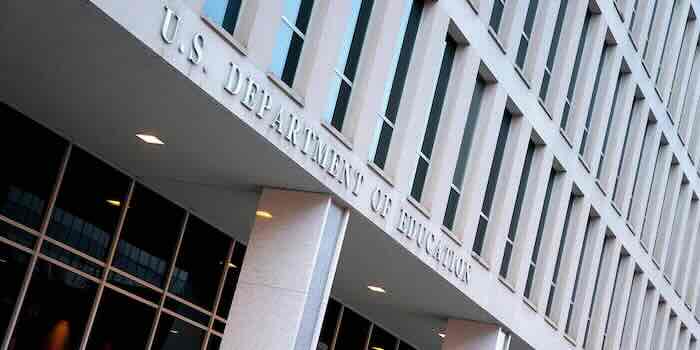
Eliminating a national Department of Education is only a necessary first step to correcting this near-fatal flaw in our society. The intentions of public education may have been good, but the outcome is evil. Time to try something better.
View Comments
David Robb is a practicing scientist and CTO of a small firm developing new security technologies for detection of drugs and other contraband. Dave has published extensively in TheBlueStateConservative, and occasionally in American Thinker.