

By News on the Net -- Bradley Coleman——Bio and Archives--July 21, 2026
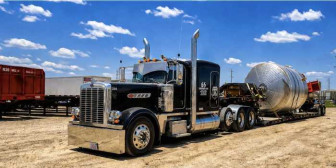
You’re not just moving freight. You’re pushing the limits of infrastructure that wasn't designed for your gear. Most guys focus on the daily rate and fuel costs, but they completely ignore the "invisible" bleed. If you want to run heavy without going broke, you have to look at the numbers that don't show up on a standard invoice.

Hauling overweight freight is like running a marathon in combat boots. Your trailer, your suspension, and your axles are under constant, unnatural stress. When you push past the standard legal limits, you aren't just wearing out parts—you're accelerating their expiration date.
A standard flatbed might run for years with minimal suspension work. An overweight rig? You’re going to be replacing bushings, bearings, and hydraulic lines constantly. If you don't account for this "tax" on your hardware, you're not actually making a profit; you’re just borrowing money from your equipment's future. Replace the gear early, or get ready for a massive tow bill when your suspension snaps on a steep grade.
The legal side is where the hidden costs really pile up. Every state has its own specific formulas for weight distribution. If you don't have the right overweight permit for every jurisdiction you touch, you're asking for trouble.
It's not just the cost of the paper. It’s the cost of the mistake. If a scale house inspector finds you’re off by five hundred pounds on an axle group, the fine is often astronomical. Plus, they might force you to sit there until you find a way to shift the load. That’s not just an hour of your time—that’s a full day of driver wages, fuel for the reefer, and a pissed-off client who’s waiting on the other end.

Moving overweight loads pushes your insurance liability through the roof. If you’re involved in an accident while carrying unauthorized or improperly permitted heavy freight, your coverage can vanish instantly. Most policies have strict clauses about legal compliance.
You’re essentially betting your entire company every time you roll over the scales. The "hidden" cost here is the premium hike you'll face after a single claim, or worse, the legal fees if you’re held liable for damaging public infrastructure. If your permit isn't bulletproof and your safety compliance isn't obsessive, you aren't running a business—you’re running a gamble.
Standard freight has a margin for error. If you’re two hours late, you get a call. If you’re two hours late with an overweight load, you might have missed your bridge crossing window, your police escort, or your curfew.
Downtime on an overweight haul is a multiplier. You’re paying for the truck, the pilot cars, and the driver while everything sits idle. If you aren't planning for the "what-ifs"—the road closures, the weather delays, and the technical re-routes—you’re losing money every second the wheels stop turning. Successful heavy haulers don't just bid for the move; they bid for the risk. If you’re only charging for the miles, you’re losing the game before you even start.
Bradley Coleman writes on Social Media, Tech, Health and Wellness issues
View Comments
News from around the world