Acura's 2016 RDX a nice ride
Acura was the first of the Japanese carmakers to go head to head against the luxury vehicle establishment from Europe

Jim Bray, CFP Automotive Editor , Bio and Archives--October 15, 2015
Automotive | Comments | Reader Friendly | Subscribe | Email Us
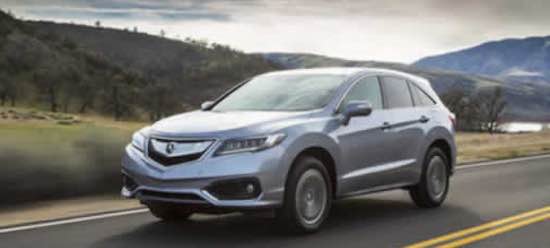 The turbo is gone, replaced by a normally aspirated V6 engine, but the heart and soul of Acura's small SUV/Crossover still beats as it always did: a nice vehicle that will stroke your luxury proclivities very well. As long as you don't mind frustrating interfaces and numerous nannies, though in this way the RDX is no different than other Honda/Acura products and a good part of the competition that I've tested.
Then there's the law of unintended consequences. These nannies are pushed by well-meaning but fuzzy thinking folks who want us to live in a little cocoon of safety but they're actually making vehicles more complicated (and therefore heavier and more expensive) and not taking into account whether or not they actually do any good. And they could end up doing more harm than good. A case in point is daytime running lights, which have been mandatory in Canada for years - but only for the front of the car. That's led to the common sight of people driving with no taillights illuminated because the DRL's illuminate their path ahead, and that can lull the driver into thinking the lights are on all around the vehicle, which isn't true - and is, in fact, an accident (a rear ender) waiting to happen.Do we really need more drivers who are blissfully unaware of the responsibilities of driving a motor vehicle? Anyway, that's not a rant about the RDX, just an acknowledgement that it suffers from the same kind of nannies that are becoming ubiquitous these days, much to my chagrin. Moving from the original RDX' turbo four, which I liked a lot, to the V6 means there's no turbo lag any more (not that it was a huge issue anyway), and it also means you also get more oomph. The current power plant is Honda's ubiquitous 3.5 litre V6 i-VTEC engine and it's a lovely thing indeed. The engine features Variable Cylinder Management (VCM), which can deactivate three of the car's six cylinders while you're cruising, to save fuel. Peak horsepower and torque are now 279 (up six) and 252 lb.-ft. (up one), respectively, with a broader torque curve for better acceleration. There are also new, active engine mounts, as well as updated steering and a stiffer suspension. The standard all-wheel-drive system has been retuned to give you a greater rear torque bias, now sending up to 40 per cent of the torque to the rear wheels. This means that, while the RDX still has a front drive-favouring bias, it's now a tad more stable and dynamic. The 2016 RDX has also been given restyled fascias front and rear, a new three-dimensional grille treatment and new wheels. It's a handsome vehicle, and it still looks like an Acura, which to me is a good thing now that awful looking last generation TL has been retired. RDX's are also tweaked inside, including high-contrast silver trim (though the trim around the left and right vents reflects too much in the outside mirrors) plus stuff like a standard power tailgate, eight way power passenger's seat and second-row air-conditioning vents. There's also a new, 4.2-inch Multi-Information Display with expanded, customizable information readouts (such as average vehicle speed, fuel economy, fuel range, tire pressure monitoring system (TMPS) and turn-by-turn navigation prompts if you have the nav system. The Technology package adds stuff like perforated leather seats (including rear seat heating), a remote engine starter, the once-great ELS audio system with 410 watts - and, unfortunately, Acura/Honda's confusing, dual-screen On-Demand Multi-Information Display. The package also adds a handy rear cross traffic monitor, power folding mirrors and rain sensing wipers. The Elite Package gives you unique 18 inch machined alloy wheels with painted gray inserts, front fog lights, front and rear parking sensors, ventilated front seats (I always find that seat ventilation makes me feel as if I've wet myself, though once again this isn't an Acura thing), and auto-dimming side mirrors. The RDX is a very nice vehicle to drive - perhaps not as sporty as I'd like but that's definitely picking at nits. We tooled around the countryside in it and, nannies and confusing interfaces notwithstanding, I enjoyed it very much. I used to complain about what seemed to be thousands of buttons and knobs on Honda/Acura vehicles, but the company has now taken steps to correct that, unfortunately it's via a dual screen system with a knob-controlled upper screen and lower touch screen, and sometimes I have the dickens of a time figuring out how to access various features. Whatever happened to Honda making it simple," as they used to advertise? Acura was the first of the Japanese carmakers to go head to head against the luxury vehicle establishment from Europe, setting the stage for Toyota and Nissan to introduce their Lexus and Infiniti brands, and they've made some terrific vehicles during that time. I think they forgot their roots for a while during the past 10 years or so, however, but the good news is that they appear to be working on that. Once they figure out the interface issues (and they're not alone here, either!), they'll give the competition an even better run for your money.
 Copyright 2015 Jim Bray
TechnoFile.com
Copyright 2015 Jim Bray
TechnoFile.comView Comments
Jim Bray, CFP Automotive Editor——Bio and Archives
Jim publishes TechnoFile Magazine. Jim is an affiliate with the Automobile Journalists Association of Canada and his careers have included journalist, technology retailer, video store pioneer, and syndicated columnist; he does a biweekly column on CBC Radio One’s The Business Network.
Jim can be reached at: bray@technofile.com