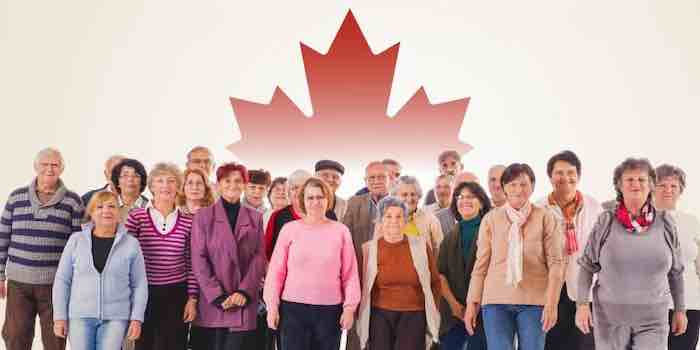
Canadians aged 65 years and older accounted for 18.8 per cent of the population in 2022. By 2043, the population share of seniors is projected to reach between 21.1 per cent and 25.5 per cent based on data from Statistics Canada; the difference relates to how fast the seniors population is expected to grow under different scenarios.
The Effect of Population Aging on Economic Growth in Canada finds that an increase in share of the population aged 65 years or older results in a reduction in the growth rate of per person GDP (a broad measure of income). Specifically, the study finds that a ten per cent increase in the share of the population aged 65 years and older is associated with a reduction in the per-person GDP (inflation-adjusted) growth rate of 0.23 percentage points.
Over time, this small difference in per person GDP growth rates can have large effects. Depending on how high the senior population reaches as a share of the total population, Canada’s per person GDP will be between $4,300 and $11,200 less than it otherwise would be, meaning Canadians will be poorer than they would have been with a stable seniors’ population.
“As the population continues to age, it will only compound Canada’s ongoing economic and fiscal challenges,” said Fuss.
“Canadian policymakers need to embrace a wide range of policies aimed at improving economic growth to offset the adverse economic and budgetary effects of population aging.”
Media Contact:
Jake Fuss, Director, Fiscal Studies, Fraser Institute
To arrange media interviews or for more information, please contact:
Drue MacPherson, Fraser Institute
drue.macpherson@fraserinstitute.org