The study specifically measures net debt, which is a measure of the total debt of the federal and provincial governments minus financial assets held by the governments. It is a common measure of indebtedness.
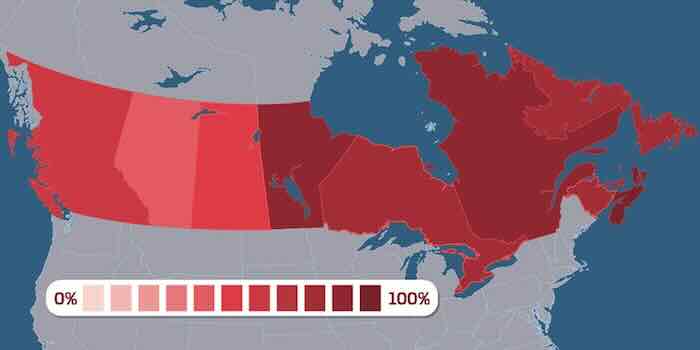
The study finds that not only has Canada’s projected combined government debt (the federal debt and the provincial debt of all 10 provinces) nearly doubled since 2007/08, the year before the 2008 financial crisis, but the combined debt now equals 76.2 per cent of the Canadian economy.
Newfoundland and Labrador has the highest debt-to-GDP ratio among the provinces at 41.6 per cent in 2023/24, while Alberta recorded the most substantial increase in its debt-to-GDP ratio between 2007/08 (-13.4 per cent) and 2023/24 (9.0 per cent)—a hike of 22.4 percentage points. Consider that Alberta’s provincial debt-to-GDP in 2023/24 remains the lowest in the country, while Quebec, which was the longstanding most indebted province, now has a debt-to-GDP ratio of 39.2 per cent.
Crucially, on a per person basis, the combined debt (including provincial debt plus a portion of the federal debt) this year ranges from a low of $42,293 in Alberta to a high of $67,471 in Newfoundland & Labrador. Ontarians have the second-highest combined debt per person ($60,609) in 2023/24.
“It’s important for Canadians to understand the magnitude of the country’s combined government debt because deficits and debt today result in higher taxes in the future,” said Fuss.
Media Contact:
Jake Fuss, Director, Fiscal Studies, Fraser Institute
To arrange media interviews or for more information, please contact:
Drue MacPherson, Fraser Institute
604-688-0221 ext. 721
drue.macpherson@fraserinstitute.org