DOO-WOP POP
Setting the Vibe with Ray d’Entremont's Liner Notes;
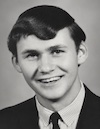
Ray d'Entremont , Bio and Archives--July 15, 2026
Lifestyles | Comments | Reader Friendly | Subscribe | Email Us
Sham-A-Ling-Ding-Dong--Jesse Winchester:
Do watch the video as you listen. Jesse appeared on my radar when a friend with a monkey on his back stuck a needle on Jesse’s new LP at Digger House, near Dalhousie campus, circa 1970. Those heads presumed Jesse a druggie too, but he was just a freaky-lookin’ draft dodger from Memphis.
More interesting to me at the time was my friend’s copy of The Band’s debut album, Music From Big Pink--home-recorded in a rented pink house in Woodstock, post-festival, after Dylan fans had booed their electric taint on his acoustic folk. I did buy that Jesse Winchester album. Then, in 2009, a song on the radio floored me: a Sundance Channel singer-songwriter roundtable hosted by Elvis Costello (a fine writer himself--Diana Krall wouldn’t marry a no-talent). He and Ron Sexsmith (CBC’s pet) look transfixed as if in the presence of songwriting royalty. Neko Case bawls her eyes out; Sheryl Crow fights a tear that finally trickles down her cheek. As good as it gets!
In the Still of the Night--Five Satins:
This timeless ballad was written by Fred Parris in 1956 while on late-night Army guard duty (lamenting a lost love who’d moved to California). Recorded in the reverb-drenched basement of St. Bernadette's Church basement in New Haven, Connecticut--only 4 of the 5 singers present, plus a local parishioner on the haunting, slightly cracked sax; it’s one of the defining hits of the era.
Get a Job--The Silhouettes:
This one evokes both sweet memories and deep tragic sorrow. Growing up in southwest Nova Scotia, nearly everyone had ties to “The Boston States.” The Kirschbaums had gorgeous identical twin girls, about 15, who sang like nightingales while backed by their 12-year-old brother on guitar. Not your usual amateurs--they had already opened for chart-toppers like the Everly Brothers in the Boston area. They loved doo-wop and nailed those tight harmonies. One day in my aunt’s living room they started singing “Get a Job,” then kicked their brother in the shins under the table, chanting in unison, “Play, brother!” He did, grinning. They adored one another! Months later, word came that he had jumped over a fence, broken a leg, and contracted tetanus. Adding to my horror, someone explained, “Lockjaw is brutal--spasms so violent his back may have snapped before his agonizing death." The girls never sang again. It’s been 70 years--I’m still not over it.
Why Do Fools Fall in Love--Frankie Lymon & The Teenagers:
Frankie co-wrote this at 13, and his soaring youthful falsetto provided the “wow factor” and helped define the music of 1956--arguably a relevant slice of the American Zeitgeist, some might say. But a couple of years later his voice dropped and he struggled thereafter as a baritone, hit heroin, and died of an overdose at 25. I sympathize, for I was a boy soprano who won regional competitions--having two semitones more top end than a sister who was the high soprano in the university glee club--but puberty scrunched my range to a rather narrow second bass. Sad yes, but it sure trumps joining the castrati!
The Great Pretender--The Platters:
I’d seen Buck Ram’s name on Only You, The Great Pretender, and Twilight Time, and assumed he was the lead singer. Turns out he was the songwriter and manager. Ram transformed The Platters' sound around Tony Williams' voice, producing their Mercury Records era and helping them achieve massive crossover success with white audiences. As a songwriter he also worked with acts like The Penguins, Coasters, Drifters, and others. The Platters had 40 Billboard Hot 100 charting singles between 1955 and 1967, including four No. 1 hits with lead vocals by Tony Williams. This song was written quickly by Ram in a restroom at the Flamingo Hotel in Las Vegas under pressure for a new hit. It reached No. 1 on the Billboard Top 100 (and R&B charts). It was featured in films like Rock Around the Clock and on the American Graffiti soundtrack, helping fuel 1970s nostalgia for 1950s music.
Will You Still Love Me Tomorrow--The Shirelles:
Perhaps my favourite Doo Wop song. Written by Carole King and her hubby/lyricist Gerry Goffin, King thought the words too vulnerable for a girl group of 1960. The producer had to talk her into releasing it as a “B” side on a Shirelles disc. A hint at how great these writers paired: they also wrote “Up On the Roof” for the Drifters.
Be My Baby--The Ronettes:
Co-written by Phil Spector, teenager Ronnie Bennett (later Mrs. Specter) rehearsed the “oh-oh-ohs” in the girls’ room because the echo trumped that of the studio. Then Phil Specter pushed session drummer Hal Blaine (Hal is on over 1000 albums/35,000 tracks) of the ubiquitous Wrecking Crew and layered a gazillion instruments--strings, castanets, handclaps, and even backup vocals by a young Sonny & Cher. Brian Wilson (Beach Boys), a genius himself, called this resultant wall of sound the “best record” he’d ever heard. Ronnie Bennett’s marriage to Specter was one of abuse and exploitation. He was a nasty piece of work. He even kept a gold coffin with a glass top in their basement, threatening to kill her and display her body in Lenin-esque style. She finally escaped his “confinement” in 1972. Specter later served time for murdering a woman and died in custody.
At the Hop--The Raisins:
Loved the original and this even more. No, they are not real raisins! A California marketing company held a meeting to try to come up with an ad that wasn’t stale or hackneyed. “There’s only so much you can say about raisins that will grab attention,” said the chairperson. One guy jokingly quipped, “We could form a cartoon rock band of wrinkly raisins and put them on TV singing, ‘I Heard it Through the Grapevine.’ A titter ran through the room, then someone said, “That’s not half bad.” They went to a recording studio, enlisted session players, and--voila!--The California Raisins! Presently they had a hit record, albums, and an insanely successful ad campaign.
Remember When--The Platters:
One of the first Doo Wop hits was “Earth Angel” by The Penguins. That success led to hiring a Chicago lawyer who’d moved to LA to pursue showbiz. Buck Ram was then promoting The Platters and used his new connections to launch them. The Penguins never had another big hit, but The Platters became one of the most successful groups of all time. In the 1980s “Eddy & the Hubcaps” formed when two teenage boys (my daughter’s friends) who knew my band history asked if I’d start a classic rock band with them. Consistent with the vintage vibe, pictures were taken in poses reminiscent of Elvis, Ricky Nelson, and Frankie Avalon, then posters printed in black & white, and the musicians’ union was coddled so if conventions wanted old rock (most did), we were top of mind. When they paid extremely well, I’d add unconventional value. Once I hired a female singer & Anne Murray’s sax player. I gave Maureen “Remember When,” “Love Letters” by Ketty Lester, and “Shop Around” by Smokey Robinson. Tony Williams’ big male voice had defined “Remember When.” Maureen was too young to have heard it before, but she nailed it overnight--every inflection, every nuance, all the cinematic intensity--eerily like the original. The audience was thrilled.
Yesterday Once More--The Carpenters:
Over the fireplace in my living room hangs a large signed lithograph of the Nile Valley, made and touched up personally by a friend, the late Shusei Nagaoka. Our sons were buddies at Berklee College of Music. We’d brought the family a dozen Atlantic lobsters from Nova Scotia. After dinner at his home in Hollywood, he showed me several LP covers he had painted. One portrayed cosmic-Egyptian imagery. It was the iconic 1977 Earth, Wind and Fire cover of the album “All 'N All.” A second was Journey’s “Escape.” Next he showed a three-panel one that most think a photograph--Richard and Karen in a red Ferrari in front of the home they’d given their parents. The album, Now and Then, had this song on it. Richard wrote nonsense words and brought a demo to his lyricist. John Bettis said, “Hey, this 'Sha-la-la-wo-wo-wo' stuff sounds pretty good!’ “Yesterday Once More” was their biggest international hit. Richard had been a prodigy; Karen an accomplished drummer. As a left-hander playing a right-handed kit, she brought some drum nuance. To hear her skill, power, and “feel,” check out “Another Song” on the 1971 Tan Album. Mostly I miss the warm contralto she breathed into your face--an intimate baring of her soul. Timing and timbre were so consistent few realized she double-tracked vocals. What a tragedy to lose her at 32 to a heart attack from anorexia nervosa. I wonder if the critics and other media figures who fat-shamed her as “Richard’s chubby little sister” in the beginning felt any remorse?
View Comments
A boy soprano, lifelong music lover, and serial starter of things, Ray has worn more hats than most people have ever owned. Music has been a constant companion.
His playlists are an eclectic mix of genres accessed by mood and time. Over the years, he variously played in mostly rock and electric blues bands, but jazz and country too, in the Runic Stones, X-Men of Note, Purple Splintered Night, Broken Vessel, Country Gold, Eddy & The Hubcaps, ORCA, Hardscratch Road 2.0, and several others. His wife of 57 years (high school sweetheart) doesn’t agree that he needs 25 guitars!