Faith Rises from the Ashes of Communism
Faith has risen from the ashes of evil communism and is thriving everywhere in Romania

Dr. Ileana Johnson Paugh , Bio and Archives--October 1, 2011
Cover Story | Comments | Reader Friendly | Subscribe | Email Us
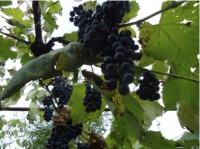 On a warm sunny day, September 7, 2011, cousin Ana drove us to the village of Popesti where my father was buried 22 years ago. I waited for this moment with bated breath to say hello and good-bye to my dad and place a wreath on his tomb.
We drove on the newly asphalted road up the beautiful hills covered with grape vines, the black grapes ripening in the fall sun. I recognized the river where we used to bathe as children, impervious to the dangers of the swift waters. None of us knew how to swim.
On a warm sunny day, September 7, 2011, cousin Ana drove us to the village of Popesti where my father was buried 22 years ago. I waited for this moment with bated breath to say hello and good-bye to my dad and place a wreath on his tomb.
We drove on the newly asphalted road up the beautiful hills covered with grape vines, the black grapes ripening in the fall sun. I recognized the river where we used to bathe as children, impervious to the dangers of the swift waters. None of us knew how to swim.When the road ended, we parked and walked through the cobbled streets to the small cemetery, peaceful in its simplicity. A light breeze was swaying the tall blades of overgrown grasses and weeds. The mixture of marble, cement, metal, and wooden crosses was a forest of forgotten sadness against the backdrop of a picturesque valley, surrounded by smoky hills. My grandmother walked with me every fall to those hills for the autumn fair to exchange hand-made goods and food with neighboring villagers. It seemed like such a far-away place to walk for a small child, but the excitement of the festive atmosphere and rides was more than enough to put an extra skip in my pace.
I expected a beautiful marble cross with dad’s picture on it, as is the custom. We certainly paid a fortune to his brother to do so. Instead, I found a rotted wooden cross, barely holding together, Dad’s name long washed and faded by 22 years of rain, snow, and sunshine. Nearby was Dad’s marble cross with my grandparents’ names engraved on it; they had died long time ago and their crosses had long disappeared. I wept in sadness and despair at the fate, even in death, of my beloved Dad. He had carried a heavy cross most of his life under the repressive communism he despised. Yet in death, a dark, rotted piece of wood marked his grave instead of the beautiful marble cross we bought.
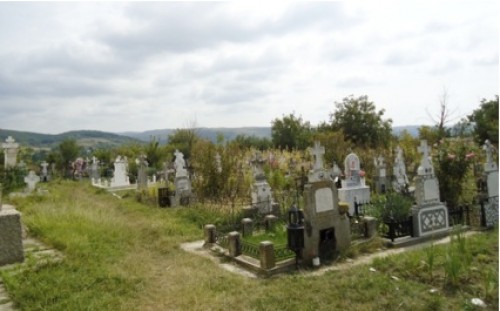 Dad passed away at the age of 61, beaten once too many times by the communist regime goons and left untreated in a hospital for almost thirty days. It was a torturous death, denied proper care and food. His sister Marcella did the best she could to care and comfort him.
I lit two candles and placed the wreath in sobbing silence, punctuated by a few chirping birds. I asked my Dad for forgiveness that I could not save his life. I promised that I would return to place another marble cross with his name engraved and his photograph, as is the orthodox custom.
The church I attended as a child was in bad need of repairs. The villagers had a sizable fund to restore it to its original beauty but it was hard to find an architect and workers. The fall of communism allowed people to worship overtly. Thousands of new churches were built and old ones restored. In time, this 20th century relic will be restored once more to its glory.
As we were leaving, the church bells were pealing in the distance very slowly, a sign that someone had died. When the bells rang faster, it was to announce to worshipers that a holiday was coming.
Dad passed away at the age of 61, beaten once too many times by the communist regime goons and left untreated in a hospital for almost thirty days. It was a torturous death, denied proper care and food. His sister Marcella did the best she could to care and comfort him.
I lit two candles and placed the wreath in sobbing silence, punctuated by a few chirping birds. I asked my Dad for forgiveness that I could not save his life. I promised that I would return to place another marble cross with his name engraved and his photograph, as is the orthodox custom.
The church I attended as a child was in bad need of repairs. The villagers had a sizable fund to restore it to its original beauty but it was hard to find an architect and workers. The fall of communism allowed people to worship overtly. Thousands of new churches were built and old ones restored. In time, this 20th century relic will be restored once more to its glory.
As we were leaving, the church bells were pealing in the distance very slowly, a sign that someone had died. When the bells rang faster, it was to announce to worshipers that a holiday was coming.
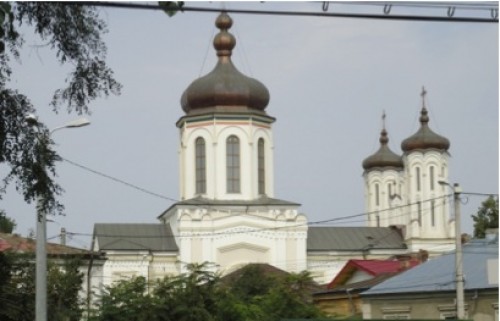 Newly restored church in Ploiesti
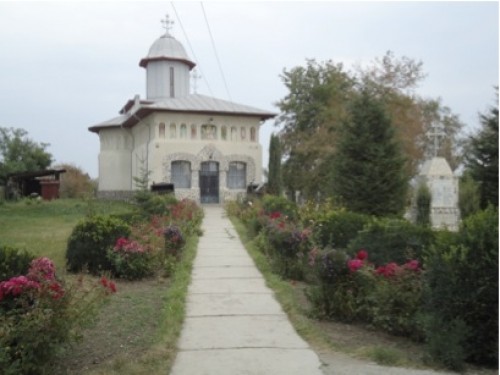 My baptism church
The maternal grandparent’s village church where I was baptized had already been completely restored. Communists allowed the existence of some churches because they needed a place for baptisms, marriages, and burials. There were no funeral homes at the time. People could marry in a civil ceremony performed by a communist clerk at the city hall instead of a church.
My baptism church
The maternal grandparent’s village church where I was baptized had already been completely restored. Communists allowed the existence of some churches because they needed a place for baptisms, marriages, and burials. There were no funeral homes at the time. People could marry in a civil ceremony performed by a communist clerk at the city hall instead of a church.
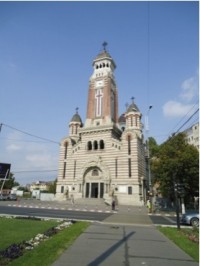 St. John’s Cathedral
I was happy to see that St. John’s Cathedral, the church I said my marriage vows in on a cold January a long time ago, was being completely restored.
The parish church close to our former tenement home was hidden behind a huge 15-story mixed-used high rise Ceausescu had built on purpose to hide its existence. The dictator had become increasingly vicious in the last years of his reign, 1985-1989.
To make room for his grandiose, monstrous “People’s Palace,” the communist dictator demolished anything in its path, including old churches, some dating back to the 1400s. It was sad that so many centuries of beautiful architecture and faith were destroyed in order to make room for his personal residence, a bizarre ode to communism and elitist opulence while the masses were forced to starve for the good of the country.
I was pleased to see in the few bookstores we found, brand new Bibles for sale. Open markets sold flowers, wreaths, and candles of all shapes and sizes. There is no longer a ban on worshiping and churches are full on weekends.
Faith has risen from the ashes of evil communism and is thriving everywhere in Romania.
St. John’s Cathedral
I was happy to see that St. John’s Cathedral, the church I said my marriage vows in on a cold January a long time ago, was being completely restored.
The parish church close to our former tenement home was hidden behind a huge 15-story mixed-used high rise Ceausescu had built on purpose to hide its existence. The dictator had become increasingly vicious in the last years of his reign, 1985-1989.
To make room for his grandiose, monstrous “People’s Palace,” the communist dictator demolished anything in its path, including old churches, some dating back to the 1400s. It was sad that so many centuries of beautiful architecture and faith were destroyed in order to make room for his personal residence, a bizarre ode to communism and elitist opulence while the masses were forced to starve for the good of the country.
I was pleased to see in the few bookstores we found, brand new Bibles for sale. Open markets sold flowers, wreaths, and candles of all shapes and sizes. There is no longer a ban on worshiping and churches are full on weekends.
Faith has risen from the ashes of evil communism and is thriving everywhere in Romania.View Comments
Dr. Ileana Johnson Paugh——Bio and Archives
Dr. Ileana Johnson Paugh, Ileana Writes is a freelance writer, author, radio commentator, and speaker. Her books, “Echoes of Communism", "Liberty on Life Support" and "U.N. Agenda 21: Environmental Piracy," "Communism 2.0: 25 Years Later" are available at Amazon in paperback and Kindle.