Life in the Village after Communism
Marxists pretended to pay citizens and the citizens pretended to work. It was not work ethic; it was a symbiotic relationship of poverty and failure, with no incentive for individual creativity and freedom

Dr. Ileana Johnson Paugh , Bio and Archives--October 10, 2011
Cover Story | Comments | Reader Friendly | Subscribe | Email Us
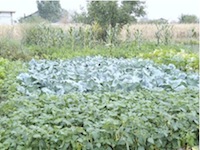 Villagers never had an easy life in Eastern Europe. They had to labor for the communist party under ridiculous quotas every season. None of these apparatchiks knew how to run a farm yet they pretended to be experts at everything.
Field production often fell short of the unreasonable expectations and centralized five-year plans; bad weather, floods, unexpected freeze, drought, and insect invasions added misery to the villagers’ tiny share of the crops after CAPs (Agricultural Cooperatives of Production) got their share. It was not enough to feed a family.
Villagers never had an easy life in Eastern Europe. They had to labor for the communist party under ridiculous quotas every season. None of these apparatchiks knew how to run a farm yet they pretended to be experts at everything.
Field production often fell short of the unreasonable expectations and centralized five-year plans; bad weather, floods, unexpected freeze, drought, and insect invasions added misery to the villagers’ tiny share of the crops after CAPs (Agricultural Cooperatives of Production) got their share. It was not enough to feed a family.
There were no incentives to try harder when everyone worked for the collective farm and some people worked less than others did but received the same share. How could it be done with one tractor per village and insufficient manual labor? When forced Marxist cooperatives failed miserably, the communist party stepped in and subsidized the shortfall after punishing local and team leaders. The land was sold to private investors when communism fell in 1989 and individual villagers reclaimed their land confiscated by the Marxists and started to farm it themselves. Part of the crop was used for personal consumption; the rest was sold on the open market. The work was backbreaking but the villagers kept the fruits of their labor. Occasionally, an unguarded field of corn was stripped bare of its harvest during the night by thieves working under the cloak of darkness.
Life and the standard of living improved quickly with freedom and no regulations. Younger members of many families left the farm and the country to work in the European Union. They returned several times a year with medicine, goods, and money to invest in better farming equipment, a nicer home, a car and other amenities. The grandparents cared for children while parents were away. Villages were connected to the power grid and satellite dishes were visible on the most modest abodes. Cell phones, cars, and access to public transportation, which was provided through generous grants from the European Union, were everywhere. The concept of taxation was misunderstood in the beginning, but now Romania enjoys a flat tax, which is very easy to calculate, collect, and distribute to various programs. Gasoline and Diesel were very expensive, $10 per gallon on the average. The steep prices forced most citizens to keep cars in the driveway while using public buses. There were savings in the driving cost because cars were small and all intersections had roundabouts.
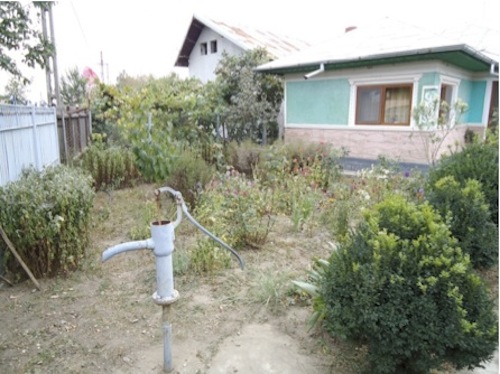 A hand water pump left since my childhood.
No running water or indoor plumbing was available unless individuals could afford to install septic tanks. Outhouses were still visible in many yards and so were hand water pumps. It surprised my husband that people could build nice, multi-story homes sometimes with complete bathrooms but no running water.
A hand water pump left since my childhood.
No running water or indoor plumbing was available unless individuals could afford to install septic tanks. Outhouses were still visible in many yards and so were hand water pumps. It surprised my husband that people could build nice, multi-story homes sometimes with complete bathrooms but no running water.
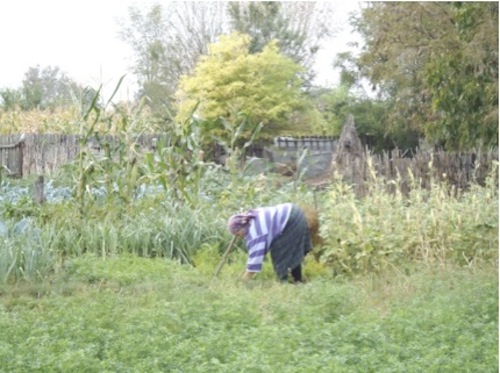 A neighbor was toiling in her potato field
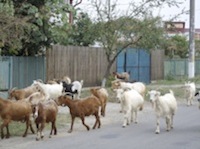 Goats in the village
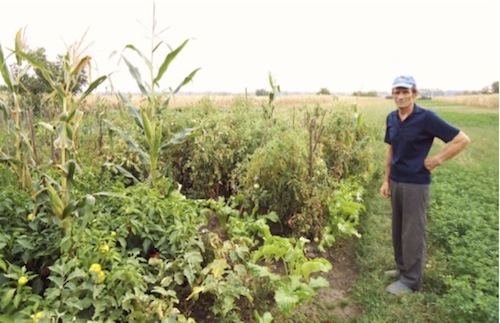 77-year old uncle is showing his garden
It was harvest time for many vegetables and fruits, red peppers, green bell pepper, potatoes, corn, grapes, plums, tomatoes, and apples. There was a distinctive smell in the air of wet fertile soil, freshly mowed grass, and natural fertilizer. Nobody used pesticides and the fertilizer came from the many farm animals, goats, cows, chicken, and pigs.
The main transport to the market inside the village, and to and from other villages was the horse pulled wagon, adapted to the asphalted roads with comfortable car tires. These were the Cadillacs of UN Agenda 21 transportation platform, no fossil fuels needed.
People were riding bikes everywhere and walking. It was not uncommon to see people in the middle of nowhere between villages, walking for miles to get where they needed to go. We had to be extra careful at night as people wore dark clothing and rode bikes without reflective patches or warning lights.
77-year old uncle is showing his garden
It was harvest time for many vegetables and fruits, red peppers, green bell pepper, potatoes, corn, grapes, plums, tomatoes, and apples. There was a distinctive smell in the air of wet fertile soil, freshly mowed grass, and natural fertilizer. Nobody used pesticides and the fertilizer came from the many farm animals, goats, cows, chicken, and pigs.
The main transport to the market inside the village, and to and from other villages was the horse pulled wagon, adapted to the asphalted roads with comfortable car tires. These were the Cadillacs of UN Agenda 21 transportation platform, no fossil fuels needed.
People were riding bikes everywhere and walking. It was not uncommon to see people in the middle of nowhere between villages, walking for miles to get where they needed to go. We had to be extra careful at night as people wore dark clothing and rode bikes without reflective patches or warning lights.
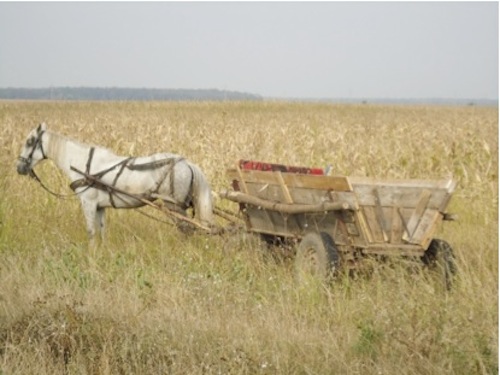 This cart will be filled to the brim with corn
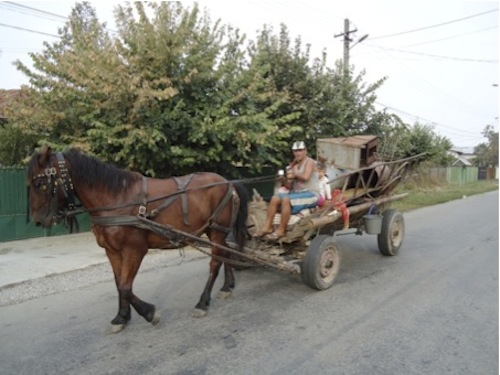 A villager is carrying scrap metal to recycling
Most homes used vines for natural shade and made wine from grapes for personal consumption and the market.
A villager is carrying scrap metal to recycling
Most homes used vines for natural shade and made wine from grapes for personal consumption and the market.
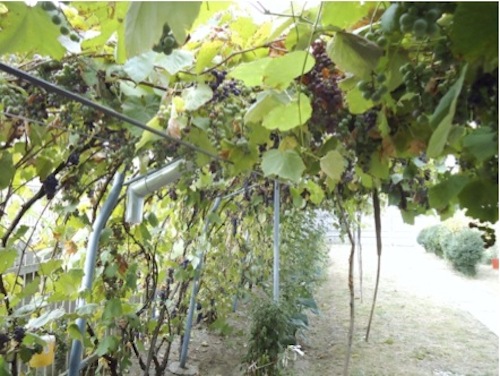 My aunt’s harvest of grapes
Villages in general have improved, with new schoolhouses, churches, amenities such as garbage pickup, electricity, technology, small grocery stores, the possibility of more development and growth, but still a poor place left behind on purpose by more than forty years of communist dictatorship, economic exploitation, and dependence on Marxist ideology.
My aunt’s harvest of grapes
Villages in general have improved, with new schoolhouses, churches, amenities such as garbage pickup, electricity, technology, small grocery stores, the possibility of more development and growth, but still a poor place left behind on purpose by more than forty years of communist dictatorship, economic exploitation, and dependence on Marxist ideology.
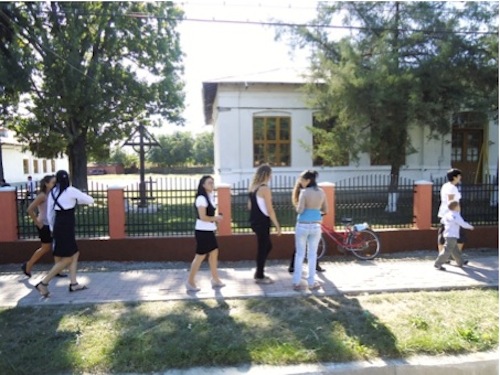 The first day of school
The ruling regime elites served themselves and robbed the country blind initially at gunpoint, while claiming their intent to defend the rights of the proletariat against the bourgeoisie. It was all a lie that enslaved and numbed the population into seething submission for over forty years.
Marxists pretended to pay citizens and the citizens pretended to work. It was not work ethic; it was a symbiotic relationship of poverty and failure, with no incentive for individual creativity and freedom. Fortunately, the Iron Curtain dropped its chains and the population woke up. They never intend to fall prey again.
The first day of school
The ruling regime elites served themselves and robbed the country blind initially at gunpoint, while claiming their intent to defend the rights of the proletariat against the bourgeoisie. It was all a lie that enslaved and numbed the population into seething submission for over forty years.
Marxists pretended to pay citizens and the citizens pretended to work. It was not work ethic; it was a symbiotic relationship of poverty and failure, with no incentive for individual creativity and freedom. Fortunately, the Iron Curtain dropped its chains and the population woke up. They never intend to fall prey again.View Comments
Dr. Ileana Johnson Paugh——Bio and Archives
Dr. Ileana Johnson Paugh, Ileana Writes is a freelance writer, author, radio commentator, and speaker. Her books, “Echoes of Communism”, “Liberty on Life Support” and “U.N. Agenda 21: Environmental Piracy,” “Communism 2.0: 25 Years Later” are available at Amazon in paperback and Kindle.