Longhair Shorts...
Setting the Vibe with Ray d’Entremont's Liner Notes: Maurice Ravel, Tchaikovsky, JS Bach, Vivaldi, Puccini, Strauss, Brahms, Beethoven, Liszt, Debussy, Schubert;
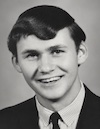
Ray d'Entremont , Bio and Archives--July 30, 2026
Lifestyles | Comments | Reader Friendly | Subscribe | Email Us
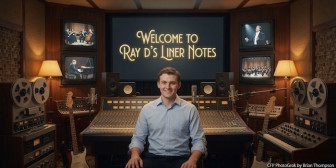
Many of the great composers had interesting--and sometimes tragic--lives. But what these geniuses created influences what we hear today. Their sponge-like ears absorbed the folk music and dance tunes of their era, and refashioned them with layered harmonies, interlocking counterpoint, and structured orchestration with carefully chosen instrumental flourish. And they passed on their notes, rhythms, dynamics in standard notation.
This took ears, imagination, and skill, and those reproducing it hundreds of years later have to practice diligently for many years to do justice to a score. Sure, we rockers and jazz players owe a debt of gratitude to the Africans who drew on their musical heritage to find new ways to ease the dark cloud that followed slavery. Laying bare that raw emotion resonated, not just with those who shared their predicament directly, but with the last century's emerging, youthful, mostly white counterculture chafing against conformity. But without the European classical tradition pop music as we know it wouldn’t exist either--no Beatles, no Billy Joel and no Freddie Mercury!
Rachmaninoff and Romantic piano literature have been especially fertile ground for later rock/pop piano-driven writing. The overlap has been continuous rather than rare, from 1960s baroque-pop and progressive rock through contemporary acts. And if you listen to the lush strings and orchestration behind much of the music of the last hundred years it isn’t much of a stretch to imagine that some of those musicians are playing through the pain of a carpal tunnel syndrome brought on by unrelenting practice. “Longhair Shorts” is a playful name for a collection of short classical music pieces--mostly under five minutes, including excerpts. The slang “longhair” is a metaphor for classical music and “shorts” denotes brevity in a genre known not only for long locks, but long compositions.
Maurice Ravel--Boléro: Orchestre national d’Île-de-France
As one long crescendo, it seems appropriate to present it in this unusual way.. Instruments are gradually added, the orchestra’s sound swells, and the crowd grows accordingly--hypnotic, masterful, fun. At the premiere a woman in the audience reportedly shouted “Help, a madman!” Ravel’s dismissive reply was: “She understood the piece.”
Pyotr Ilyich Tchaikovsky--Swan Lake; Bergen Philharmonic:
When I was a little kid my older sister gave me two children’s records for Christmas. These had Tales From Vienna Woods, Blue Danube, and Swan Lake on them which were probably my favourites then. My sister claims all credit for any musical ability I have as a result, though my musical friends would say she gets the blame! To this day this music always washes over me with “a peaceful, easy feeling.” Watch here
JS Bach--Cello Suite No. 1 in G Major:
Yo-Yo Ma’s 19 Grammy Awards and a Presidential Medal of Freedom say it all about the cellist. He has been playing this piece since he was four years old - when he first started learning cello. He has recorded the complete suites three times across different decades of his life. This has been a constant thread throughout his entire career--almost a personal diary. In interviews he often talks about how the music keeps revealing new things to him as he ages. Bach’s works appeal to modern musicians; it’s easy to imagine a drummer playing along, probably because Bach swings, and lends itself well to improvisation. Baroque music came from dance, eh?
Robert Schumann--"Träumerei" (Dreaming):
Virtuoso Vladimir Horowitz plays my favourite piano piece. I was first moved by this melody while enjoying local cuisine in an intimate club in Germany where a local medical doctor was celebrating his birthday. We could hear friends and family celebrating with him begging him to play. He finally made his way to the house piano and played so marvellously that I was deeply moved and fought back tears. No doubt he was thinking of his childhood.
Vivaldi--"Violin Concerto in E Major, RV 269, "La primavera”, I. Allegro:
Canadian violinist James Ehnes plays Vivaldi flawlessly--and joyfully. For many years Vivaldi taught gifted girls at an orphanage in Venice. Its finest musicians formed an extraordinary all-female orchestra and choir, performing behind screens in the chapel. The Four Seasons may have been written for them as they were so prestigious that folks came from across Europe to marvel at their virtuosity. Antonio Vivaldi drew inspiration from nature. In “Spring” birds sing, brooks babble, breezes rustle leaves, and a thunderstorm passes through. To my ear, it sounds exactly like spring.
Giacomo Puccini--"Nessun dorma" Luciano Pavarotti/The Three Tenors:
It means “None shall sleep.” From Puccini’s unfinished opera, “Turandot,” it became the most famous tenor aria in the genre. Pavarotti made it his signature piece, and his commanding performance at the Three Tenors’ 1994 Dodger Stadium concert - held before the World Cup final - ends with the celebrated high B and the triumphant cry, “I will win!” One source I read said that Pavarotti warned the conductor he wasn’t well & might not hit that high note, but the crowd’s reaction wowed him so much, he not only nailed the high B, he held it longer & with more power than usual.
Johann Strauss II--The Beautiful Blue Danube; Strauss Festival Orchestra:
I listened to this a lot for it was on my childhood classical LP. It became a worldwide sensation after Strauss wrote full orchestration for it for the 1867 Paris World’s Fair. It so screams “POSH” that James Cameron used it in Titanic as Leonardo DiCaprio enters the Grand Staircase for dinner. When Strauss’ stepdaughter asked Brahms to autograph her fan, he wrote the opening bars of Blue Danube & then, “Unfortunately not by Johannes Brahms.”
Béla Kéler/Johannes Brahms--WoO, Hungarian Dance No. 5 in G Minor; Wiener Philharmoniker:
Brahms arranged this piece without crediting its composer, Hungarian Béla Kéler. He’d heard it so often he thought it was a traditional Gypsy folk song. Kéler was understandably upset. Brahms played taverns with Gypsies, improvising into the night. Like most composers, he didn’t invent melodies out of whole cloth, but combined sounds he heard in the folk Zeitgeist, adding harmonies, rhythms & structure--exactly how the Hungarian Dances entered his catalogue. The orchestration was actually done by Martin Schmeling, a German arranger, who liberally uses triangle & cymbals, adding sparkle that appeals to popular taste, like pepper on a ribeye.
Franz Liszt--Liebestraum No. 3:
Here Steinway ambassador Lang Lang plays until the middle, then the Spirio player piano plays itself, having faithfully recorded an earlier performance--every dynamic, all pedal work, every nuance. Technology has come a long way!
Claude Debussy--Deux Arabesques, L. 66; No. 1, Andantino con moto:
Ilia Kim uses subtle pedalling to blend the colours of the meandering melodies and cascading figures that define an arabesque, creating the effect of the slowing of time. Debussy’s piece sounds Western, not like Arabic music. That is because Debussy borrowed the word from decorative art; an arabesque is an intricate pattern of interlacing, curving lines, not culturally defined music. This Korean concert pianist has a particular affinity for the composer, having recorded an entire album of his piano works.
Beethoven--Für Elise:
One of the most recognisable melodies in music, it is here performed by the phenomenally popular online pianist “Rousseau.” His first name remains a mystery--and so does the identity of “Elise,” who, like “Mona Lisa,” is lost in the haze of history. Some have speculated that she was Therese Malfatti, whom he hoped to marry, her name misread by the transcriber due to Beethoven’s dreadful handwriting. Or some speculate that it was about 17-year-old singer and close friend Elisabeth “Elise” Röckel? Any definitive answer may have disappeared forever with the manuscript, which was lost sometime after the piece was found and published in 1867--40 years after Beethoven’s death.
Franz Schubert--"Ave Maria"--Leontyne Price/Herbert von Karajan and the Vienna Philharmonic:
Schubert originally wrote this as “Ellen’s Third Song,” a prayer from Sir Walter Scott’s The Lady of the Lake in which a daughter asks the Virgin Mary to protect her exiled father. It was my mother’s favourite song. At her funeral in Saint Ambrose Cathedral in Yarmouth, my son and I accompanied the soloist on guitars--three generations of our family joined in Schubert’s timeless prayer.
View Comments
A boy soprano, lifelong music lover, and serial starter of things, Ray has worn more hats than most people have ever owned. Music has been a constant companion.
His playlists are an eclectic mix of genres accessed by mood and time. Over the years, he variously played in mostly rock and electric blues bands, but jazz and country too, in the Runic Stones, X-Men of Note, Purple Splintered Night, Broken Vessel, Country Gold, Eddy & The Hubcaps, ORCA, Hardscratch Road 2.0, and several others. His wife of 57 years (high school sweetheart) doesn’t agree that he needs 25 guitars!