Nova Scotia and New Brunswick sitting on billions of dollars in undeveloped shale gas potential
Nova Scotia and New Brunswick are sitting on significant natural gas reserves worth hundreds of billions, but bans on hydraulic fracturing and regulatory challenges prevent their development
Fraser Institute , Bio and Archives--February 27, 2025
Canadian News, Opinion | Comments | Reader Friendly | Subscribe | Email Us
• Atlantic Canada has significant reserves of unconventional natural gas which could be developed via the technology of hydraulic fracturing
• Newfoundland & Labrador, as well as Prince Edward Island are believed to have unconventional shale gas potential as well, though no firm estimates have been developed.
Hydraulic Fracturing: Opportunities for Atlantic Canada
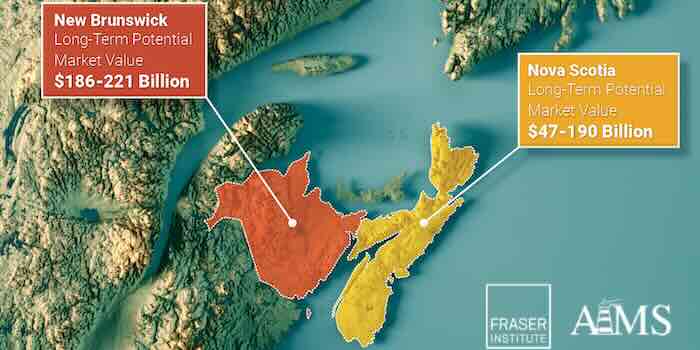
- A 2017 report by the Canadian Energy Research Institute estimates that onshore, primarily shale gas potential in-place at the Horton Bluff in Nova Scotia ranges from 17 trillion cubic feet (Tcf) to 69 Tcf. At current market prices for natural gas, this reserve would represent a market value of between $47 billion and $190 billion.
- Nova Scotia’s Frederick Brook shale formation has been estimated to hold between 67.3 Tcf to 80 Tcf of gas in place. At current market prices for natural gas, this reserve would represent a market value of $186 billion to $221 billion.
- Moratoria on hydraulic fracturing instituted in 2013–2014 remain in place in the Atlantic provinces, preventing the development of Atlantic Canada’s shale resources, and leaving potentially large economic gains trapped underground.
- Removal of those moratoria would certainly be a first step in sending a signal that Atlantic Canada might be open for hydraulic fracturing gas development. However, it might not be enough to spur development of the resources. Environmental regulations such as the Impact Assessment Act, Canada’s Net Zero 2050 framework, the Clean Electricity Regulations, and opposition from Aboriginal groups would all pose barriers to natural gas development.
View Comments
The Fraser Institute is an independent Canadian public policy research and educational organization with offices in Vancouver, Calgary, Toronto, and Montreal and ties to a global network of 86 think-tanks. Its mission is to measure, study, and communicate the impact of competitive markets and government intervention on the welfare of individuals. To protect the Institute’s independence, it does not accept grants from governments or contracts for research. Visit fraserinstitute.org.
Follow the Fraser Institute on Twitter | Like us on Facebook