Should Betting On Special Olympics Be Offered?
Betting brings more attention to sports

Guest Column Daisy Smith, Bio and Archives--June 25, 2024
Lifestyles | Comments | Reader Friendly | Subscribe | Email Us
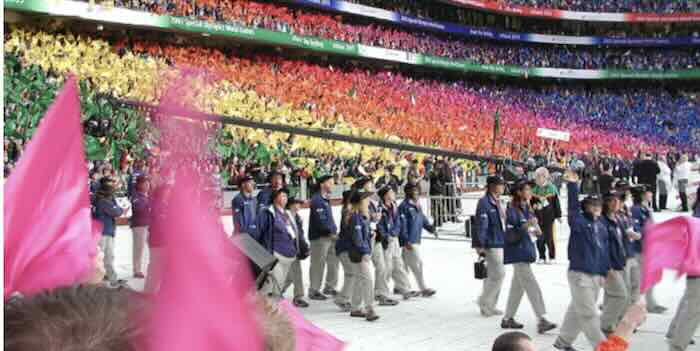
Supporting over 5 million athletes who compete in 32 different Olympic-style sports, the Special Olympics have provided both a forum for and opportunity to people with intellectual disabilities to rise and shine in the spotlight on the world stage for more than 50 years. The first Special Olympics were held in 1968.
It isn’t often that there is either controversy and consternation surrounding this wonderful, positive event, yet that was the case a year ago leading up to competition in the 2023 Summer Special Olympic Games.
For the first time ever, some online sports betting sites were offering the chance to place a bet on Special Olympics events.
From the outside, many people viewed this decision as offensive. It was seen as insulting and degrading to the athletes involved in the competition.
At the same time, there were those - including some involved on the inside of the Special Olympics - who felt that by offering wagering on the events, it was placing the Special Olympians into a scenario in which the competition was being viewed not only as a legitimate sporting event, but even on par with the Olympic Games and Paralympics.
So who’s right? Which viewpoint makes the most common sense? The answer seems to be that arriving at an answer to this question isn’t as cut and dried as it might seem.
Betting Sites Defend Decision
When the odds were first posted on the 2023 Special Olympics, those behind the decision were ready with a response to the harsh backlash they expected to and in fact did receive.
"We anticipate(d) some negative reaction for our Special Olympics odds, but we've been doing this for nearly three decades and have proven that our offerings have an overall positive impact on the visibility of a sport," BetOnline brand manager Edward Knight said in a statement.
"We're a gaming company that provides entertainment products, so every goal behind our marketing strategies is to generate publicity not only for us, but also for the competition. These athletes have worked their butts off to get to Berlin, and they deserve every additional layer of exposure they can get."
Betting lines were being offered on six Special Olympic sports - athletics (track and field), basketball, cycling, swimming, soccer and powerlifting. They were the first betting markets ever supplied for Special Olympics competition. Odds to win individual and team disciplines, for both male and female, were made available for wagering.
"There's nothing gimmicky about these odds," Knight said. "Just like any other sport, we've created Special Olympics odds behind weeks and weeks of research. These are incredibly-skilled athletes competing on an even playing field, and our oddsmakers will give these World Games the same level of attention and respect as the Super Bowl."
Some Support For The Idea

Certainly, from the outset, it was apparent that providing wagering on the Special Olympics was going to quickly turn into a hot button issue. And that’s exactly what happened.
“This would seem to be a win-win-win for everyone except those who complain for a hobby or profession,” wrote Forbes Magazine in response to BetOnline’s decision to offer betting on the Special Olympics.
Forbes wasn’t the only major mainstream media outlet that was viewing this scenario as a good thing.
“Skimming across the odds, I didn’t realize the United States women’s swimming team was such a powerhouse,” Joe Winner of ESPN South Florida wrote after learning there were betting odds on the Special Olympics. “They are heavily favored to score gold. And maybe they’ll get the recognition they deserve.”
That, say those who have a vested interest in the success and growth of the Special Olympics, is one reason why support for betting on the event can be viewed as a positive outcome.
Parents of intellectually disabled children want one thing more than anything else for their kids - that they be treated the same as all other children. Allowing people to bet on the biggest sporting event in their realm could go a long way to making that happen.
“Could we do more through legalized sports betting to highlight these Special Olympic athletes, celebrate their triumphs, celebrate their pursuits, and help give it more household name recognition?” Brianne Doura-Schawohl, a problem and responsible gambling advocate, asked in an interview with betting site Sports Handle.
Not only does Doura-Schawohl speak on behalf of responsible gambling, she’s also the parent of an autistic child.
“A lot of traditional sports have leaned into the legalization of sports wagering as a way to highlight their sport,” Doura-Schawohl said. “And I think there might be a similar sentiment here.
“The Special Olympics are a really important event that have been happening for over 50 years, and how many people really follow it? How many people really celebrate the pursuit of these individuals who are deserving of equal opportunity?”
Can Betting Grow The Special Olympics?
From BetOnline’s point of view, that’s the bottom line. The evidence shows that Doura-Schawohl’s point isn’t moot. Betting brings more attention to sports. Industry reports show that people are as much as 76% more likely to watch a sporting event if they have placed a wager on the event.
“We aimed to create mass awareness about the Special Olympics and our pioneering introduction of odds for the World Games, which was accomplished in remarkable fashion,” Knight told the New York Post.
The next Special Olympics Summer Games are set for Turin, Italy in 2025.
“In (2025), we will again offer Special Olympics odds,” Knight told the Post. “We will be better prepared in the grading process, and we hope this viral movement will inspire the organization to enhance the distribution of clear and comprehensive information regarding competition results.”
Daisy writes on current event, sports, Leisure and lifestyles
View Comments
Items of notes and interest from the web.