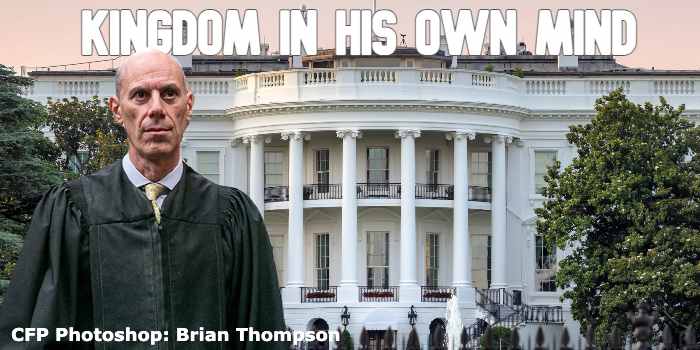
This limitation of the power of the Judiciary is deliberate
The ultimate descriptions of the three powers will be found in the text of the Constitution, but we can summarize the duties of the divisions he
- Legislative--Legislature creates and defines the law
- Executive--Executive enforces the law
- Judicial--Judges interpret the law and assign guilt or innocence
This is the same order in which the branches are defined in the Constitution, illustrating the proper relationship between the three branches. Note that the Judiciary is listed last, and is the most limited in power. The Judiciary cannot make laws, has no power to enforce laws, and cannot decide which laws are permissible, nor which actions are allowed. It can only offer opinions about the actions of the other two branches. It cannot decide for other branches if a law or an enforcement action is allowed by the Constitution.
It can judge if laws or actions are consistent with the Constitution or with other laws enacted by legislature, but it cannot say what those laws should be or what actions must be taken.
If a law is unclear, it can so rule and suggest that the Legislative branch revise and clarify a law, or even repeal it if necessary, but cannot declare a law passed by Legislature to be invalid, or rule according to what it believes a law should be. When it declares something to be unconstitutional, it is ruling that there is an inconsistency or contradiction that exists between the law, action, or rule and the provisions of the Constitution. That is a signal to the Legislative or Executive branches that something should be addressed, but otherwise cannot force a change.
This limitation of the power of the Judiciary is deliberate. The Judiciary is the weakest branch for good reason. It was recognized that if the Judiciary had the power to enforce its judgments on the other branches, it would put an unelected group in the position of absolute power and divorce them from the ability of the citizens to remove them. By making judges appointments by the two other branches, the power of the electorate would be preserved.
As a matter of fact, the Constitution explicitly states that judges, including Supreme Court justices shall only hold their offices subject to good behavior. While not explicitly stated, it can be assumed that good behavior includes not trying to assume the powers granted to the other branches. No activist judges need apply.
This is not to say that the opinion of appointed judges should be taken lightly, or ignored. Only that a judgment rendered against another branch should be seriously considered or reconsidered as it may indicate a problem that should be addressed in a different way, or something that encroaches on the rights of the citizens that the Constitution guarantees. It does not have the authority that a judgment that applies to a different entity would have.