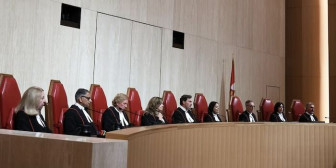
Sentencing circles “are not an Indigenous creation” even though they may share some features with Indigenous conflict resolution
But the decision was not unanimous: four of the nine justices dissented, arguing that Indigenous law should not override established Canadian law.
My view, rooted in an understanding of traditional Indigenous culture, goes far beyond the minority opinion. I assert that something now called “Indigenous law” existed neither in the past nor is alive in the present, the clearest evidence being that Indigenous people routinely apply to the Canadian courts whenever confronted with civil or criminal issues.
More important still, law is a system of enforceable rules created and backed by a governing or societal authority to regulate behaviour, maintain order, and resolve disputes. More specifically, it requires a supreme governing body, legislature, or established custom, backed by official sanctions, penalties, fines, or imprisonment if violated, that generally applies equally to all members of a community, including citizens, organizations, and the government itself.
“Indigenous law” shows none of these features.
This does not mean that communities without formal legal systems lack customary ways of dealing with chronically disruptive or violently destructive behaviour. Such communities have “healing circles”--now arbitrarily transformed in Canada into “sentencing circles”--that help resolve serious conflicts among competing parties. Still, such informal tribunals should not be conflated or “braided” with true legal systems.
Moreover, sentencing circles “are not an Indigenous creation” even though they may share some features with Indigenous conflict resolution.
Regrettably, this muddling now exists in Canada's criminal law system, even at the highest court level, resulting in guilty parties receiving reduced sentences based on ethnic or racial membership. Meanwhile, the victim is left to suffer in silence.
In Cope v. the Crown, the accused was a part-Indigenous man, which brought Gladue sentencing principles into play in his guilty verdict.
In its narrow decision, Canada’s Supreme Court upheld a lower court’s reduction in Nova Scotia of a criminal sentence against Cope for brutally assaulting his Common Law partner in 2021.
Hope’s victim required surgery to put the small bones of her eye socket back together, and her sternum was also fractured. This was part of a criminal record going back 16 years, complete with violence and breaches of court orders.
At his first trial, Cope pleaded guilty to aggravated assault. That led to a Gladue-mandated sentencing circle, an Indigenous restorative justice process in which the offender, victim, elders, and community members discuss the crime and recommend a sentence to the judge. The circle recommended three years.