Considerations for Self Defense-Continued -- Weapon Selection
AVOIDANCE OF CONFRONTATIONS as likely the very best policy to follow whenever and wherever possible. Never forget that the best outcome of a dangerous situation is that IT NEVER HAPPENED!

Stan McHugh , Bio and Archives--April 25, 2025
Guns-Crime-Terror-Security | Comments | Reader Friendly | Subscribe | Email Us
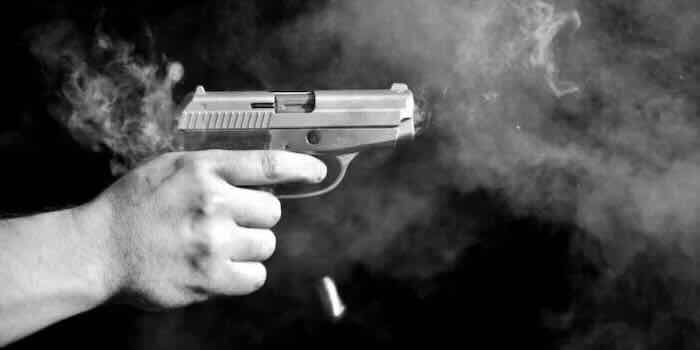
There are quite a number of handguns made and that are available and suitable for carrying for self-defense. Hopefully, as has been the case with the author, the vast majority of readers will NEVER find themselves in a situation where they might need to use or even present a potentially deadly weapon. However, that being said, the best selection of a handgun to carry for potential self-defense has a number of factors that are well considered in making one’s choice.
“Bigger Is Better”, from the standpoint of caliber, power and effectiveness in ending a dangerous situation is a factor that is certainly of significant importance but the author would like to suggest other considerations for readers as well. Never forget that in the hopefully unlikely situation where one must fire their own weapon to end a threat, a good “hit” by a .22 LR probably has a far better chance of accomplishing that result than would six “misses” from a .44 Magnum. The point is that one should choose as their “carry weapon”, a handgun that they can shoot effectively and accurately.
For those readers of this article that are considering legally carrying a handgun for personal protection and are trying to make a choice as to what to carry, the author will provide several things to consider in making a selection. A very good early step in doing so is to find, in their own area, a place where they can examine and learn the operation of various firearms. Ideally, this might be a gun shop that also has a firing range and employees that are trained and experienced in assisting a “new shooter” in first learning firearm safety followed by helping them safely fire the pistols under consideration.
One of the first steps that, in the author’s opinion is important, is to find a handgun that “just feels right” when held and shot by the person considering such a purchase. Some pistols just seem to “fit” an individual’s hand better and more comfortably than do others. This does not mean that there is anything “wrong” with the ones that don’t “feel right”. It is a simple fact that human hands vary in shape and size and that some pistols will be quite likely just plain “feel better” than do others.
Returning to the “Bigger Is Better” subject as expressed above, a full sized and larger caliber pistol may also have the potential of creating a measure of intimidation in the mind of an individual posing a serious threat. When compared with small “pocket pistols” a full size large caliber handgun does tend to make the statement “I’m well-armed and know what I am doing with regards to handguns.” Now, whether that would make the assailant more or less likely to fire their own weapon is hard to predict. However, it will likely induce a considerable level of stress in an assailant which might cause a sudden desire to be elsewhere or, at least, have a negative effect on their ability to shoot accurately. Looking into the muzzle of a full sized high caliber pistol could certainly result in either or both effects.
The author will now suggest that readers think seriously regarding whether a revolver or a semi-automatic handgun is preferable, for them, as a carry weapon for potential self-defense. In either case the weapon chosen should ONLY be one that readers have themselves fired and fired a lot. The knowledge on the part of readers that they can “hit what they are shooting at” is critical.
Regarding revolvers, virtually 100 % of the time, quality double action revolvers in good condition when fully loaded with quality ammunition will fire when the trigger is pulled and nothing beyond pointing (aiming) and pulling the trigger is required. Typically such revolvers can also be fired in “single action” mode where the hammer is first pulled back until “set” then the revolver fired by only pulling the trigger. In most such revolvers greater accuracy can, in most cases, be attained in that mode.
Regarding semi-automatic pistols things can become more complicated as such weapons come in a variety of styles and designs with factors that must be considered when firing such a weapon as follows:
1. Loading a semi auto pistol requires putting live ammo into a separate part called the magazine which must then be inserted into the pistol’s grip after which, the pistol’s slide must be activated to extract a round of ammunition from the magazine and insert it into the firing chamber before the weapon can be fired.
2. Not all but a significant number of semi-automatic pistols include a manual safety that must be moved into its “off” position in order to allow the weapon to fire when the trigger is pulled. This means that, in such pistols, even after a live round is in the firing chamber another step is required in order to fire the pistol.
Reloading a handgun is also something that should be practiced with either a revolver or a semi-automatic pistol. Of course, if readers have practiced with their handgun as recommended above the chances of needing to reload it diminish significantly. It is a fact that most self-defense encounters with handguns have taken place at 3-5 yards. Still, the difference in reloading a revolver as opposed to a semi-automatic handgun is something to consider.
Revolvers hold the ammunition in a cylinder before it is fired and the empty cases remain in the cylinder after firing. The empty cases must first be removed from the cylinder before new live ammunition can be inserted. In double action revolvers that is accomplished by holding the weapon with its barrel pointed upward and pressing downward on the ejection plunger after which new live ammunition can be inserted. This can be accomplished quickly by using a “speed loader” after which the cylinder must be re-closed. Semi-automatic pistols are reloaded by first removing the then empty magazine and replacing it with a loaded one. Obviously, in both cases it is absolutely necessary that replacement ammunition be available to the person carrying the weapon.
Should readers make a decision to carry a firearm, where legal to do so, it is very important for each and every one so inclined to fully understand how the laws in their state could affect them should the actual use of their weapon to defend themselves or someone else makes doing so necessary. Although this article is written to assist the readers in the selection of a firearm for self-defense, it also highly recommends AVOIDANCE OF CONFRONTATIONS as likely the very best policy to follow whenever and wherever possible. Never forget that the best outcome of a dangerous situation is that IT NEVER HAPPENED!
Do stay safe out there.
View Comments