Institute for Energy Research
 The Institute for Energy Research (IER) is a not-for-profit organization that conducts intensive research and analysis on the functions, operations, and government regulation of global energy markets. IER maintains that freely-functioning energy markets provide the most efficient and effective solutions to today’s global energy and environmental challenges and, as such, are critical to the well-being of individuals and society.
Most Recent Articles by Institute for Energy Research:

It simply prevents unelected bureaucrats in Sacramento from dictating what kind of cars the rest of America drives

Natural Gas Plants Under Attack in Several States
March 27, 2018
Coal-fired power plants were first and now natural gas-fired power plants are getting the ax, particularly in states with high mandates for renewable energy

Electric Vehicles Beware: Customers Prefer SUVs and Pick-Ups
March 20, 2018
SUVs and pick-up trucks are increasing in demand–not just in the United States, but around the world—as car buyers are looking to more roomy and powerful vehicles

No, China Will Not Outsmart America’s Energy Renaissance
March 17, 2018
China should recast its energy policy for its citizens, and the U.S. should reject central planning schemes at home and abroad. Electric vehicles, wind turbines, and (on-grid) solar panels are the energy past, not the energy future

The Gas Tax Has Little to Do With Road Costs
March 16, 2018
Benefit of privatizing the roads is that governments at all levels wouldn't be able to justify tax hikes by claiming "we need to fix the roads."


But IEA cautions that investment is needed in the oil sector in areas besides the United States to meet future demand and to avoid skyrocketing prices

The D.C. Carbon Tax Comedy of Errors
March 8, 2018
We can challenge the misinformation surrounding the D.C. carbon tax initiative with facts: a local carbon tax would do nothing to reduce rates of childhood asthma, it is at best a clumsy way to address local air pollution

Gasoline Is Already Taxed Too Much
March 2, 2018
Despite claims to the contrary, gasoline is not "undertaxed." Taxes are currently 21 percent of the total price at the pump

Repealing the RFS Is Still the Best Answer
February 28, 2018
The ultimate problem with the RFS is that the government is mandating the purchase of a product that Americans don’t need and most Americans don’t want

The United States has bountiful supplies of critical and strategic minerals necessary for all technologies, including energy. It is a good thing that the Trump Administration is looking to change policies to accommodate the production of more of thos

Climate Math: Adaptation, Not Mitigation
February 22, 2018
Kudos to Ted Nordhaus-- An intellectual moment of note for critics of global climate governance—a mistaken, futile, and socially unjust crusade

A Gas Tax Hike Is the Wrong Way to Fund Highways
February 20, 2018
Using the federal gas tax to fund highways and other infrastructure is at best a very blunt instrument, and at worst an invitation to wasteful spending

Oil and Energy Security: Another Fallen “Market Failure”
February 8, 2018
The key elements of such a framework are economic liberty, respect for property, and fair and sensible rules of the market that are enforced equally for all

Paul Krugman Should Love President Trump’s Infrastructure Plan
February 3, 2018
Why Krugman Ought to Applaud Trump’s Plan

The Ever-Expanding Wind PTC
February 1, 2018
The cumulative effect of the IRS guidance is that despite the “phase out” in 2019, the federal government will still be paying PTC subsidies and distorting markets at least into the 2030’s.

A New, Unanticipated Oil World
January 31, 2018
Predictions from 1999, in retrospect, were far too pessimistic about the global oil market and the U.S. in particular. The last decade has been among the most prolific in the history of the petroleum industry-

The Trump Redirect Comes Not a Moment Too Soon

Thoughts on the Solar Tariffs
January 25, 2018
Tariffs a Blunt and Inefficient Instrument

An Entirely Predictable Bankruptcy
January 24, 2018
Philadelphia Energy Solutions

Regulations Hurt Economics of Nuclear Power
January 21, 2018
U.S. nuclear industry is struggling, as the federal government has imposed increasingly onerous burdens on the industry, which supplies around 60 percent of the carbon-free electricity in the United States

Does Bitcoin Use Too Much Electricity?
January 19, 2018
Bitcoin miners aren’t internalizing the true social costs of their activities

Trump’s Offshore Leasing Plan Could Increase Discoveries
January 13, 2018
Having a life line to other supplies is important to energy security and the future supply needs of the world

Bad Policies Cause Prices to Spike in the Northeast
January 11, 2018
Bad decisions can have bad consequences, and the recent cold weather is proving that for consumers in the Northeast

Regulation and Economic Growth
January 9, 2018
It doesn't make us richer to scrap existing techniques and equipment in order to comply with a new rule from Washington

Study: Electric Vehicle Charging Could Present Grid Challenges
January 5, 2018
While some countries such as Norway are seeing a large demand for electric vehicles driven by government policies such as tax incentives, free parking and tolls, free charging and other benefits
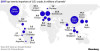
U.S. Oil and Natural Gas Exports Soar
January 5, 2018
The United States is the world's largest producer of oil and natural gas because of the ingenuity of U.S. oil and gas producers in applying hydraulic fracturing and directional drilling in shale basins

Economic rejuvenation by opening up our taxpayer owned energy resources

Three Cheers for Holiday Lighting!
December 27, 2017
Climate Taxation, Climate Alarmism

It’s Easy for Santa to Move Coal
December 21, 2017
The hubris of using taxes and regulations to shoot for a “global temperature target” should be apparent to anyone but the most overconfident technocrat